
Walton Jail Escambia Overflow Role
Escambia County’s current detention narrative identifies Walton County Jail as an outside custody site. An Escambia detainee can therefore remain tied to an Escambia booking and court case while confined in another county’s jail. The booking county, physical custodian, and court are three separate record sources. Each answers a different question.
The Escambia record identifies the local booking, agency, charges, holds, case number, and any county release timestamp. The receiving jail knows when it accepted and physically discharged or transferred the person. The Escambia Clerk docket explains orders, bond, disposition, sentence, or commitment. When the person moves from Escambia to Walton, the move is a transfer. It does not prove release to the street.
The official Escambia detention overview is the local source naming overflow arrangements. Its captured page provides context for why an outside jail can appear in an Escambia custody path.
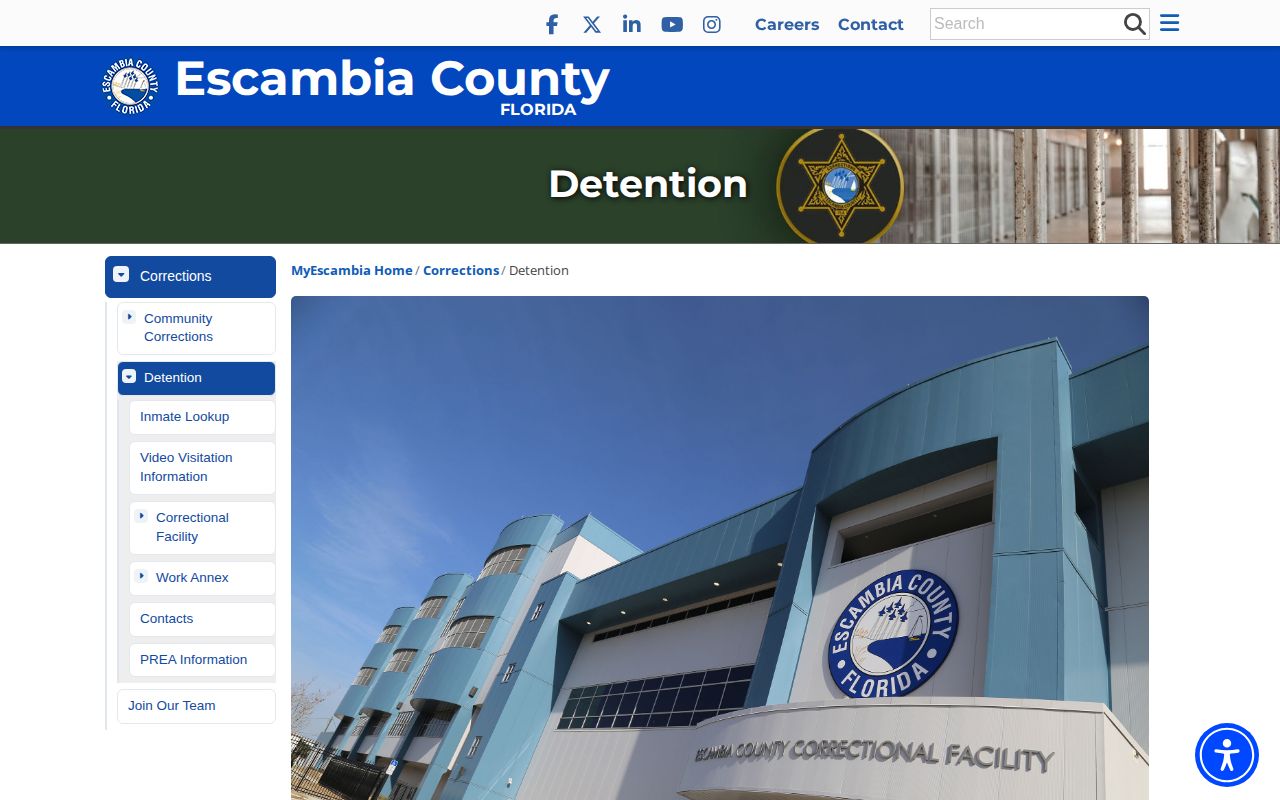
The overview confirms a multi-site detention system, so the last physical custodian must be found before the final release is described.
Confirm Walton Jail Release
Start with the official Escambia record because it anchors the identity and local case. Use names as a starting point, not the sole match. Booking and MNI numbers, photo, age, agency, and court case reduce the chance of mixing people with similar names.
- Open Escambia JAIL View and search “Both Current And Released” for the person.
- Match the correct booking by photo, age, booking number, MNI number, agency, and case number.
- Read the status, exact release timestamp, holds, and charge-agency text.
- Look for Walton County or other receiving-custody clues, then verify physical custody with the receiving jail.
- Follow the Escambia case number into the Clerk docket for orders, sentence, or disposition.
- If the final discharge remains unclear, request the movement history, receiving agency, and release authorization from the proper custodian.
A Walton result should be tied back to the same person and episode. If Escambia shows a closed booking but Walton shows present custody, the county event was a transfer out of Escambia control. If Walton later releases the person, Walton’s discharge record is the decisive physical event.
The Escambia County released inmate search supplies the broader county, state, federal, court, and notification paths for a named person.
Walton Transfer or Community Release
Roster absence is not a release type. A person can disappear from the current Escambia view because the booking closed, the name changed, the dates are too narrow, or custody moved elsewhere. “Released” in one jail system proves the end of that jail’s control under the booking. It does not identify the destination on its own.
| Observed event | What it establishes |
|---|---|
| Current Escambia booking | The local booking remains open, even if overflow custody may be elsewhere. |
| Escambia Released status | Escambia’s booking ended at the displayed time. |
| Walton receives the person | Physical custody continued in the receiving jail. |
| Walton transfers the person | Custody moved again; no community discharge is shown. |
| Walton physically discharges the person | The receiving custodian created the final jail release event. |
Review holds before using the word “released.” A DOC, federal, ICE, out-of-state, or another-county hold points to a receiving system. The court record may explain why Escambia custody changed, but the jail that opened the door or transferred the person records the physical event.
Note: One custodian’s release timestamp can be the next custodian’s intake path, so destination is as important as status.
Walton Release Record Chain
No single screen is guaranteed to state the full story. Escambia JAIL View’s strongest pairing is Released status with an exact timestamp under one booking number. Charges, historic bond values, and holds are leads. They are not a final disposition or a reliable label for bond, time served, dismissal, transfer, or sentence completion.
The Escambia Clerk docket can show a release order, bond change, dismissal, plea, judgment, jail credit, sentence, or commitment. A docket entry is not always a certified judgment. When formal proof is needed, request the final disposition, judgment and sentence, release order, or certified copy from the Clerk.
- Booking record
- Shows the local jail episode and its status.
- Movement record
- Shows transfer between custodians or detention locations.
- Release authorization
- Identifies the authority or method used to end custody.
- Court disposition
- Explains the legal outcome but may not supply the exit time.
Ask Walton for the final physical release record only after confirming it held the person. Research supplied no current Walton address, phone, or public record route for publication here, so no contact detail should be guessed.
Escambia Overflow Record Contact
Escambia County Corrections operates the local jail system and is the right starting point for a post-2013 Escambia booking sheet, release record, or movement history. Contact Detention with the booking number when asking where the person was housed or sent. For a written request, identify the full name, booking number, booking date, requested release time and type, and receiving agency.
Escambia County Corrections Detention
3080 N. Pace Boulevard
Pensacola, FL 32505
850-436-9830
Detention information line
Use the Escambia County public-record request channel for Corrections-held records. ECSO is a different custodian for sheriff-created arrest or offense reports. Sending a jail movement request to the sheriff risks delay because county government assumed jail operations in 2013.
A narrow request is easier to route. Ask for the booking-and-release record, movement history, release authorization, and receiving agency. If material is withheld, request the statutory basis and the nonexempt remainder.
Walton Overflow After Jail Disaster
Escambia’s overflow practice has local history. Heavy rain in April 2014 flooded the old Central Booking and Detention Facility and contributed to a gas leak and explosion. The condemned site forced detention to be spread among the Main Jail, Work Release Center, Santa Rosa County, and Walton County.
The modern Escambia County Correctional Facility opened in 2021, but current detention material still names Walton as an outside custody site. That history explains why older records may use Central Booking, CBDF, L Street, Main Jail, Pace Boulevard, or phase labels. Search synonyms can help with archived records, while the current county contact page should control present Escambia contact details.
The history also reinforces the custody distinction. Confining people in Walton did not convert an Escambia case into a Walton case and did not release them from custody. Physical location changed while legal and booking records could remain divided among agencies.
Missing Walton Release Records
A blank search requires another step. In Escambia JAIL View, widen dates, try a name variant, and search both current and released records. Check the case number. Then ask whether the person was held under an Escambia booking, a Walton booking, or another agency’s authority.
Older Escambia released records have remained searchable for long periods in observed tests, but that is not a promise that every record stays online. Correction, migration, confidentiality, sealing, or an exemption can affect display. A no-result cannot establish that no booking or transfer occurred.
If the person later entered FDC, use the state population and release databases. If a federal agency took custody, use BOP after designation or the federal court path before designation. The receiving system, not the vanished current-roster entry, answers what happened next.
Walton and Santa Rosa Custody
Escambia research identifies both Walton and Santa Rosa in the local detention context. A person may move among county sites without returning to the community. Track each event by date, booking number, and receiving agency rather than assuming that the first roster to drop the name created the final discharge.
The Santa Rosa County Jail release page applies the same custodian rule to that neighboring jail while preserving its separate role in the Escambia record chain.
When accounts conflict, request movement records from Escambia and the final discharge record from the jail that physically held the person last. That pairing is more reliable than a single current-roster snapshot.
Reconcile Walton Custody Dates
Build a short chronology when records appear to conflict. List the Escambia booking time, any court order, the Escambia Released time, the confirmed Walton intake, and the later Walton discharge or transfer. Times recorded by separate systems may post at different moments, so sequence and identifiers matter more than the order in which screens were found.
If Walton intake follows the Escambia release closely and the identifiers match, the evidence supports a custodian handoff. If there is a gap, request the Escambia movement record and the receiving intake record. Do not fill the gap with an assumed community release.
A final Walton discharge can still lead to another custodian. Read the destination and any hold before closing the chronology. The result should state exactly which jail event was confirmed and which later outcome, if any, remains unresolved.